

Palm nut soup: the red that runs through the family
Extracted from the fruit by hand, simmered slow, and always better the next day.
Written by The Kitchen

If you grew up in a Ghanaian house, you can probably recognise palm nut soup by sound before you see it. A low, patient bubbling, and the smell of something round and sweet and faintly smoky underneath it.
Where the red comes from
Palm nut soup starts with the fruit of the oil palm, boiled and then pounded or pressed so the pulp separates from the fibrous kernel. What you are after is that thick, deeply orange extract. It looks almost too rich to eat and, honestly, on its own it is.
The cooking is what tames it. The extract goes into a pot with water, aromatics, chilli and usually a piece of fish or smoked meat, and it simmers until the oil begins to separate and rise. That moment is the sign that the soup has come together. Anyone who has cooked it will tell you that you do not need a clock, you need your eyes.
The combinations
Palm nut soup is one of those dishes that has a different name depending on what is in it, and every version is somebody's favourite.
- With chicken, the mildest and most common
- With fish, usually smoked or dried, which pushes the soup towards something darker and saltier
- With goat or beef, for a heavier, longer-cooked pot
- With rice balls, which is how we sell most of ours, because the two belong together
Better the next day
Here is the thing about palm nut soup that nobody tells you: it improves overnight. The flavours settle, the oil lifts cleanly, and the whole pot gets rounder. Make it a day ahead if you can, and reheat it gently rather than fast.
What to do with the leftovers
It freezes beautifully. Portion it while it is still hot, cool it quickly, and it will keep for months. On a cold evening it is the fastest good meal in the house.
Our rice balls with palm nut soup travel as one pack, with the soup and the rice kept apart so nothing goes soft on the way to you.
Keep reading
More stories

Hausa koko — the breakfast that starts before sunrise
Fermented millet, ginger, pepper and a plate of koose: the dawn porridge that runs Ghana's mornings — and now ours.

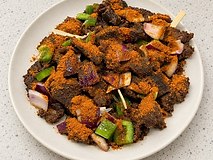
Suya — the peanut rub that crossed the border
Yaji spice, Hausa origins and a grill that never quite cools: the story of West Africa's most famous street kebab.

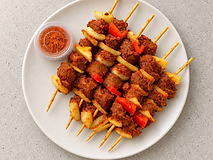
Chinchinga — skewers, smoke and the charcoal glow
From street-corner grills to our counter: the story of chinchinga, Ghana's peppered charcoal kebabs.