

Hausa koko — the breakfast that starts before sunrise
Fermented millet, ginger, pepper and a plate of koose: the dawn porridge that runs Ghana's mornings — and now ours.
Written by The Kitchen

The porridge that wakes the country
In Ghana, koko starts before the sun does. The koko vendor is the first cook on the street — up at three, working a pot that has been in the family for a generation. The night before, millet was soaked; by morning it has fermented just enough to carry that faint, clean tang that separates real koko from sweetened porridge. It is ground with ginger and dried pepper — koko is savoury first, sweet only if you ask — and cooked slow, stirred and stirred until it pours thick and glossy.
Nobody eats it alone. Koose — spiced black-eyed pea fritters — ride alongside, or fresh bread for mopping, or fried eggs for the full table. It is breakfast as a small ceremony: one bowl, a crowd of sides, and a morning that has properly begun.
The tang in the millet is the signature — koko without fermentation is just porridge wearing a costume.
How we make ours
Our millet is soaked and fermented overnight, ground fresh with ginger and a whisper of dried pepper, then cooked to a smooth, spoon-coating pour. We serve it the three ways Ghana does:
- With koose — the classic pairing, fritters crisp outside, fluffy within
- With bread and fried eggs — the full chibom morning
- Sweet or plain, sugar and milk on the side — your bowl, your call
Order it for a weekend morning and let the house smell like a Ghanaian dawn.
Keep reading
More stories


Kelewele — the plantain that sings after dark
Ghana's spicy fried plantain belongs to the evening — ginger, chilli and hot oil, eaten straight off the street.


Shito — the black sauce on every Ghanaian table
Dark, deeply savoury, endlessly useful: the story of shito, the chilli sauce Ghanaians refuse to eat without.

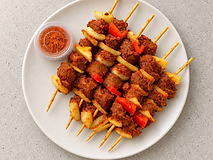
Chinchinga — skewers, smoke and the charcoal glow
From street-corner grills to our counter: the story of chinchinga, Ghana's peppered charcoal kebabs.