

Jollof Rice — the dish that travels
How a single pot of rice became West Africa's most debated — and best loved celebration dish, and how we get the rich depth just right.
Written by The Delicious Eats Kitchen

A dish born of the courts
Jollof Rice traces its lineage to the Wolof people of Senegal, where thieboudienne — a fish-and-rice dish cooked in one pot — laid the foundation for what would travel across West Africa. As the recipe moved south through trade and migration, each region made it its own: the tomato deepened, the pepper sharpened, and the rice took on the rich character we now recognise instantly.
The Ghanaian way
Ghanaian Jollof is built on a base the cooks call sofrito-adjacent — blended tomato, onion and scotch bonnet, with added spices, the base is fried until the oil splits and the paste turns brick-red. The rice is toasted briefly in that base before the stock goes in, so every grain is stained. We finish it low and slow, lid on, until a crisp crust — the prized kanzo — forms at the bottom of the pot.
How we prepare it
- Toast the rice in the fried tomato base for a minute before adding water — this is what stops it going mushy.
- Keep the lid on. Every lift lets steam escape and the grain cooks unevenly. Trust the pot.
- Finish with a rest. On very low heat, cover the pot with aluminium foil and a napkin, and keep the lid on, for ten to fifteen minutes to trap the steam. The residual steam then cooks the jollof evenly.
A note on the pepper
Scotch bonnet gives Jollof its heat intensity, but it should never overpower. We blend it into the base whole — seeds and all — but cook it long enough that the heat mellows into a warm hum rather than a sharp sting. If you're sensitive to heat, halve the pepper and remove the seeds before blending.
Jollof is a dish meant to be shared — whether at a wedding, a Sunday dinner, or a homecoming, we cook ours the way it's meant to be: one generous pot, served with fried plantain, generous meat options and a cold drink.
Keep reading
More stories

Hausa koko — the breakfast that starts before sunrise
Fermented millet, ginger, pepper and a plate of koose: the dawn porridge that runs Ghana's mornings — and now ours.

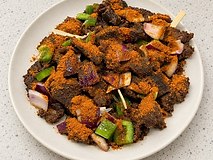
Suya — the peanut rub that crossed the border
Yaji spice, Hausa origins and a grill that never quite cools: the story of West Africa's most famous street kebab.

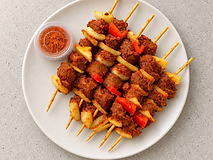
Chinchinga — skewers, smoke and the charcoal glow
From street-corner grills to our counter: the story of chinchinga, Ghana's peppered charcoal kebabs.